Normal sinus rhythm
Rate 60-100 and regular. One upright P before every QRS, PR 0.12-0.20 s, QRS under 0.12 s.
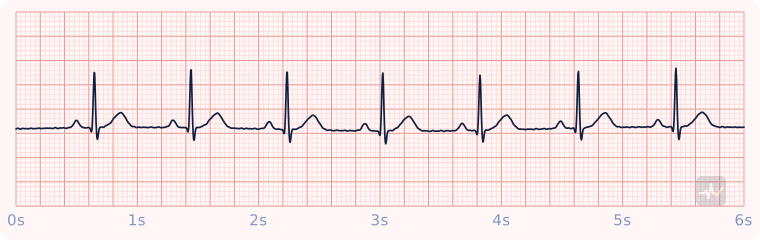
How to identify Normal sinus rhythm
- Rate
- 60-100
- Rhythm
- Regular
- P waves
- Upright, one before every QRS, all the same shape
- PR interval
- 0.12-0.20 s, constant
- QRS
- Under 0.12 s
- Clincher
- Every step of the six-step read is normal.
Rhythms it gets mistaken for
Normal sinus rhythm vs Sinus arrhythmia
Normal sinus rhythm has a regular rhythm. With sinus arrhythmia you would see a rate that speeds up and slows down in a smooth, repeating wave.
Normal sinus rhythm vs 1st-degree AV block
Normal sinus rhythm has a normal PR interval of 0.12-0.20 s. With 1st-degree block you would see a PR interval over 0.20 s that is the same on every beat, with no dropped beats.
Normal sinus rhythm vs Sinus bradycardia
Normal sinus rhythm has a rate of 60-100/min. With sinus bradycardia you would see a rate under 60/min.
Treatment by certification level
Open your level. Treat the patient, not the strip.
Paramedic
No rhythm treatment needed.
- Treat the patient in front of you, not the strip.
AEMT
Pulse present and stable.
- Oxygen only if hypoxic or short of breath, IV access, monitoring.
- Acquire and transmit a 12-lead ECG. Interpreting it is a Paramedic skill.
- Transport and reassess. Request a paramedic if the patient worsens.
EMT
Pulse present: assess and support.
- Treat the patient, not the rhythm name: airway, breathing, circulation, vital signs.
- Oxygen if the SpO2 is under 94%, the patient is short of breath, or shows signs of shock.
- Request ALS and transport promptly. Reassess on the way.
An AED goes only on a patient who is unresponsive, not breathing and pulseless. It cannot feel a pulse, so on a patient with a pulse it can advise a shock that would do harm.