Diabetic Ketoacidosis (DKA) Signs and Symptoms
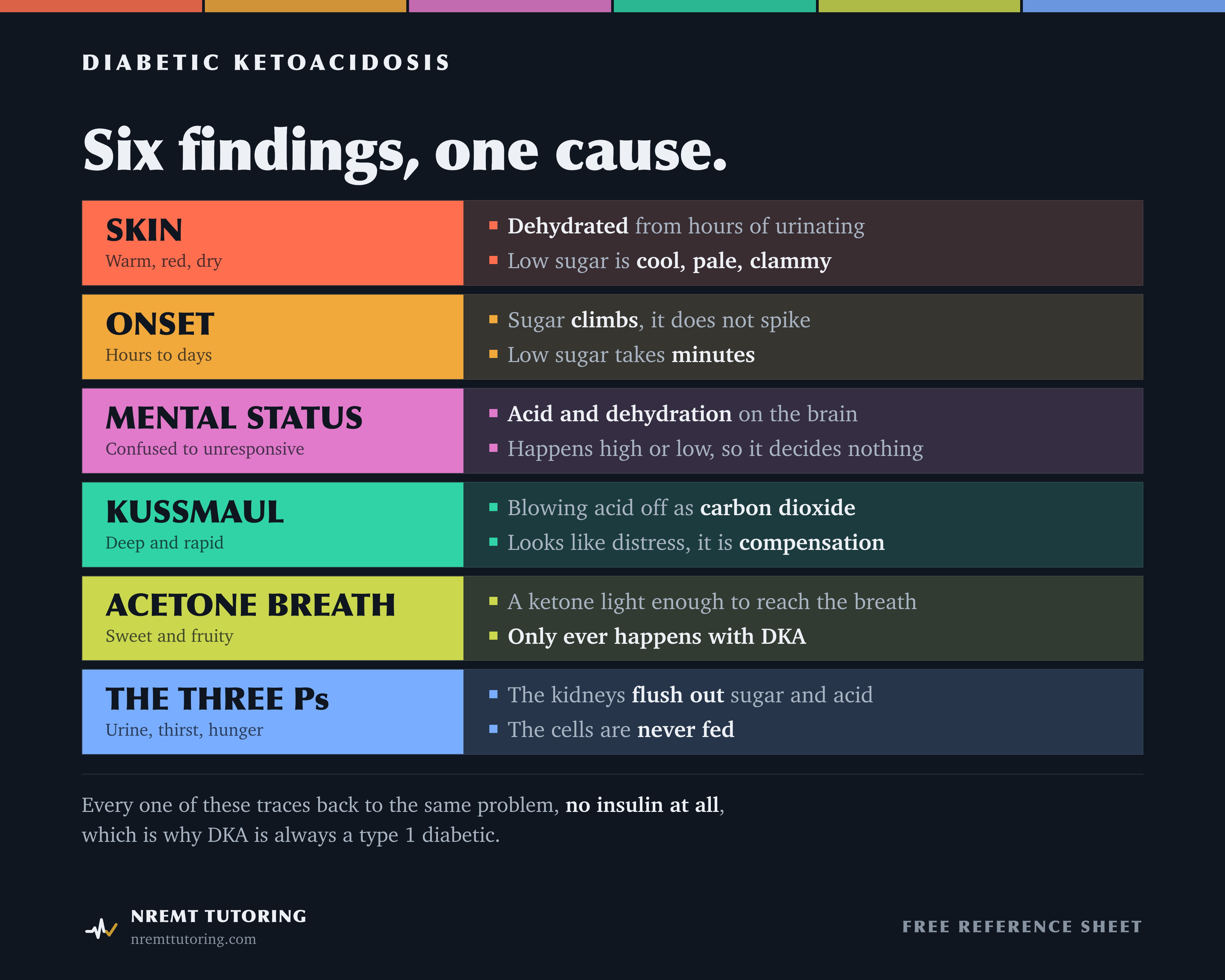
A free reference chart of the six findings that identify diabetic ketoacidosis and the reason behind each one: warm, red, dry skin, an onset over hours to days, a mental status anywhere from confused to unresponsive, deep and rapid Kussmaul respirations, sweet and fruity acetone breath, and the three Ps of urination, thirst, and hunger.
Free to save, print, and share with your class. Updated October 21, 2026.
Read the skin and the onset first
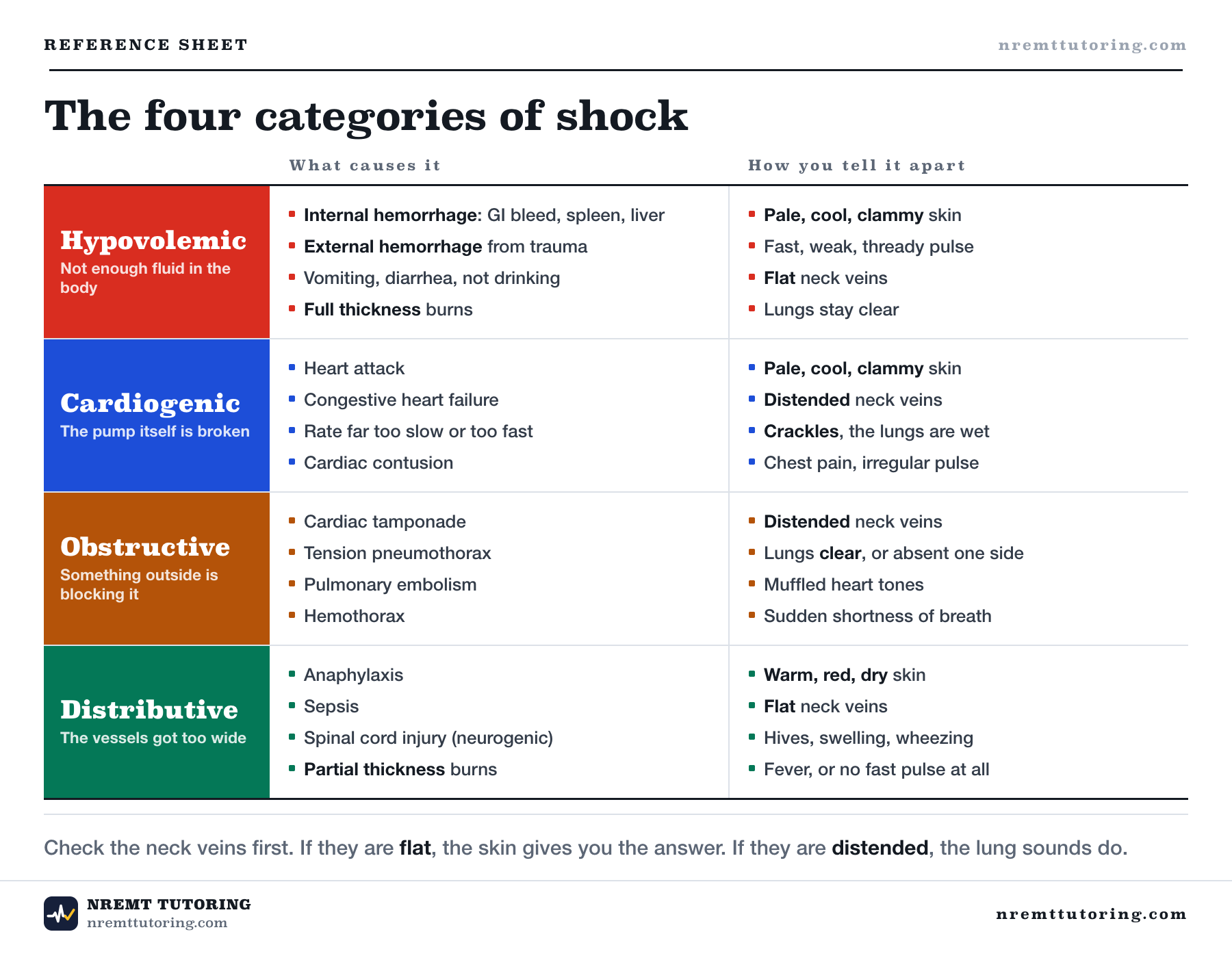
Two findings sort high sugar from low sugar before the glucometer is even out. A patient in DKA has warm, flushed, dry skin with a dry mouth and cracked lips, because hours of urinating have left them dehydrated and there is no fluid left to sweat. A patient with low blood sugar is cool, pale, and clammy.
The onset is the second clue. DKA builds over hours to a couple of days, so the patient was unwell long before anyone called and the family watched it happen. Low blood sugar drops in minutes and comes with no story. A long story points at high sugar, and the glucometer confirms it.
Why DKA happens: no insulin at all
A type 1 diabetic makes no insulin. Without insulin, sugar cannot get into the cells, so it builds up in the blood while the cells starve. The body turns to burning fat for fuel, and burning fat produces ketones. Ketones are acid, and as they pile up the blood turns acidic.
Every finding on the chart traces back to that one problem. The sugar in the blood pulls water out through the kidneys, the acid drives the breathing, and the starving cells drive the hunger. That is why DKA is always a type 1 diabetic.
Kussmaul respirations and acetone breath
Kussmaul respirations are deep and fast and do not let up, even at rest. The blood is full of acid, and the lungs blow it off as carbon dioxide because that is the fastest way the body has to dump acid. It looks like respiratory distress, but it is compensation, the one thing in this patient that is going right.
Acetone breath smells sweet, not foul, like nail polish remover or overripe fruit. Acetone is a ketone light enough to leave through the lungs. Fruity breath means DKA and only DKA, because no other diabetic emergency makes ketones.
The three Ps are a chain
Polyuria comes first: the kidneys flush out the extra sugar and acid and take water with them. Polydipsia follows, because that much urine leaves the patient dehydrated and thirsty. Polyphagia is the cells talking: they are not receiving glucose, so they keep sending hunger signals even though the blood is full of sugar.
Learn the three as one chain, not a list. Ask the patient or family about urinating, thirst, and hunger over the past day or two, and the answers tell you how they got here.
Mental status decides nothing
A patient in DKA can be anywhere from quiet and withdrawn to confused to hard to wake, from the acid and the dehydration acting on the brain. Low blood sugar produces the same range of mental status changes, so an altered mental status alone never tells you which one you have.
Any diabetic with an altered mental status gets a glucose check. The skin, the onset, and the breathing are what point at DKA.
DKA or HHNS
DKA is type 1 only. It builds over hours to a couple of days, symptoms start around a blood sugar of 300 to 350, and it brings fruity acetone breath and Kussmaul respirations. HHNS is type 2 only. It builds over days to weeks, the sugar is usually 600 to 650 and climbing, and there is no fruity breath.
The difference is insulin. A type 2 diabetic still produces some insulin, enough to stop the fat burning that makes ketones, so the sugar climbs much higher without the acid. No ketones means no acetone breath and no Kussmaul respirations.
Common questions
- Can a type 2 diabetic go into DKA?
- No. DKA needs a body with no insulin at all, which is a type 1 diabetic. A type 2 diabetic still makes some insulin, enough to stop the fat burning that produces ketones, so their sugar climbs into HHNS instead.
- What blood sugar level causes DKA symptoms?
- Symptoms usually start around 300 to 350. That number is a floor, not a ceiling, and many patients in DKA read far higher. HHNS usually starts around 600 to 650 and keeps climbing.
- Why does a patient in DKA have fruity breath?
- The body is burning fat for fuel because it has no insulin, and burning fat makes ketones. Acetone is a ketone light enough to leave through the lungs, which gives the breath a sweet, fruity smell like nail polish remover. Only DKA does this.
- What are Kussmaul respirations?
- Deep, rapid breathing that does not slow down at rest. The blood is acidic from ketones, and the lungs blow the acid off as carbon dioxide. It is the body compensating, not a sign that the lungs are failing.
- How do I tell DKA from low blood sugar?
- Look at the skin and ask about the onset. DKA is warm, red, and dry and came on over hours to a couple of days. Low blood sugar is cool, pale, and clammy and came on in minutes. The glucometer confirms which one it is.
- Can I print this DKA chart or use it in class?
- Yes. The chart is free to view, download, print, and share with your class or study group. A link back to nremttutoring.com is appreciated but not required.
Now go answer questions on it
A chart tells you what separates them. Questions are what prove you can do it under time. Practice is free and unlimited, with a full explanation on every answer.
Start free practice